
The Birth of Venus is a famous painting by Italian artist Sandro Botticelli, created in the late 15th century (around 1484-1486). It depicts the mythological birth of the goddess Venus, also known as Aphrodite in Greek mythology.
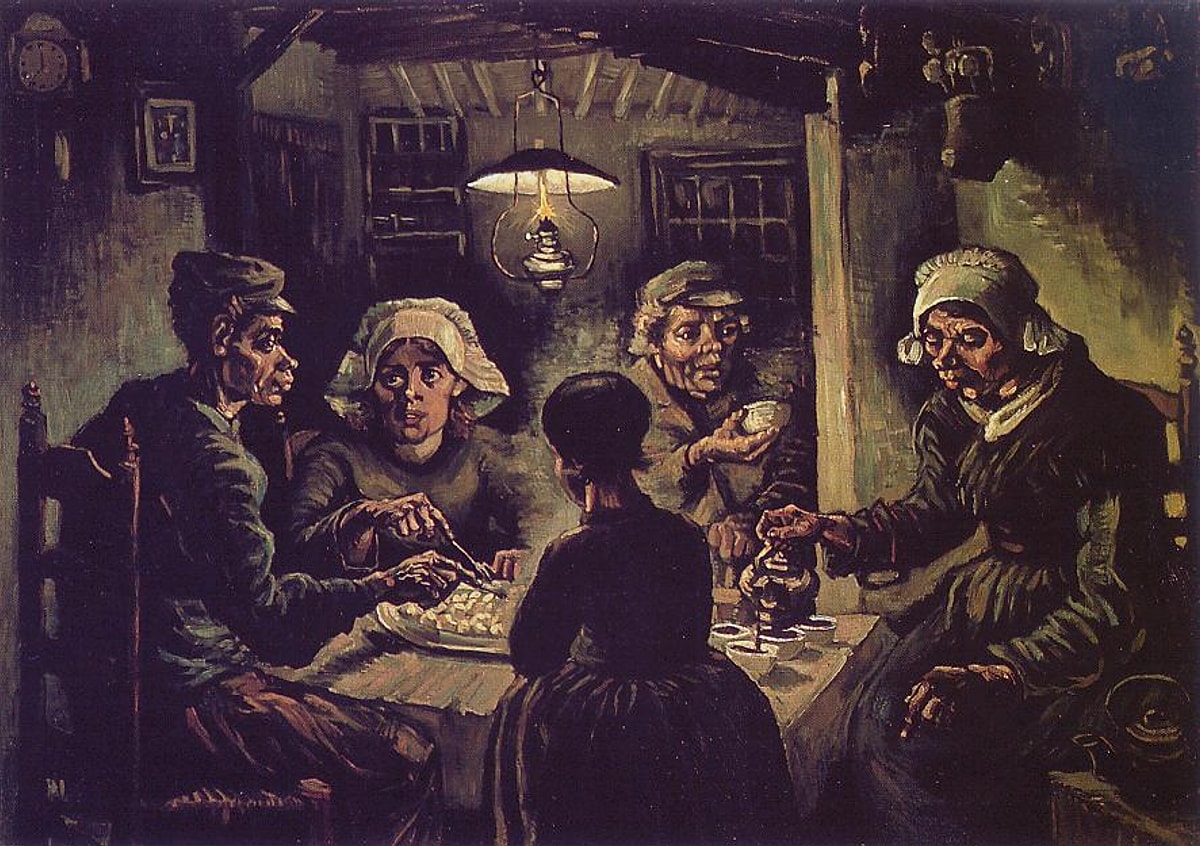
The Potato Eaters is a famous painting by Dutch artist Vincent van Gogh, created in 1885. It depicts a group of peasants sitting around a table, eating a simple meal of potatoes. The painting is known for its dark and earthy tones, reflecting the harshness of rural life in the late 19th century. Van Gogh aimed to portray the dignity and humanity of these laboring peasants, and this work is considered one of his early masterpieces. The use of dark colors and rough brushwork gives the painting a sense of realism and emotional depth.

The Hay Wave originally titled Landscape: Noon - is a painting by John Constable, completed in 1821, which depicts a rural scene on the River Stour between the English counties of Suffolk and Essex.[1][2] It hangs in the National Gallery in London and is regarded as "Constable's most famous image"[3] and one of the greatest and most popular English paintings.

The Hireling Shepherd (1851) is a painting by the Pre-Raphaelite artist William Holman Hunt. It represents a shepherd neglecting his flock in favour of an attractive country girl to whom he shows a death's-head hawkmoth. The meaning of the image has been much debated.

The Ninth Wave is an 1850 painting by Russian-Armenian marine painter Ivan Aivazovsky. It is his best-known work.